


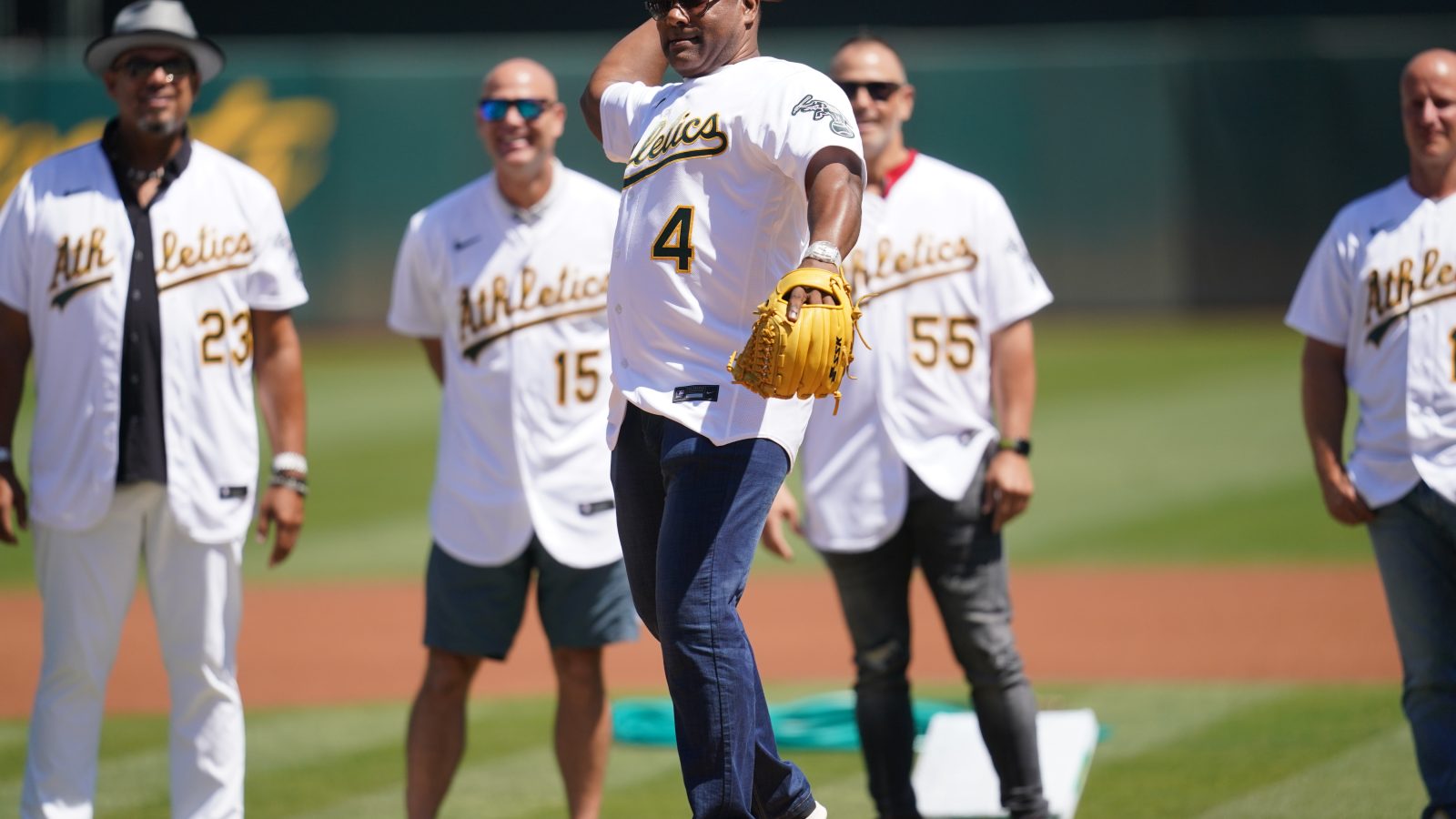
Twenty years ago, a baseball team with one of the smallest payrolls in Major League Baseball used statistical models to build a roster that won 20 consecutive games. The Oakland Athletics’ 2002 season, later immortalized in Michael Lewis’s bestseller Moneyball, marked the moment professional sports stopped treating data as a curiosity and started treating it as a competitive weapon. What followed has been nothing short of a complete transformation in how teams across every major league evaluate talent, prepare for opponents, and make decisions under pressure.
From Gut Instinct to Gigabytes
The numbers tell a striking story. In 2000, roughly 23% of professional sports teams employed a dedicated analytics professional. Today that figure stands at 97%. The average analytics department has grown from just over one person in 2010 to nearly eight full-time specialists, with top-tier organizations fielding teams of 20 or more quantitative analysts. Investment in sports analytics technology has surged by 800% since 2015, reaching $4.6 billion, and the market is projected to hit $12.8 billion by 2028.
The NFL was among the first leagues to embrace the shift at scale. Player tracking systems installed in every stadium now generate real-time data on speed, acceleration, route patterns, and separation distances for every player on every snap. Teams use this information to optimize play-calling, evaluate free agents, and design game plans tailored to an opponent’s specific tendencies. The Chicago Bears’ front office, like every modern NFL organization, now makes personnel decisions backed by predictive models that weigh hundreds of variables beyond the traditional scouting eye test.
The NBA has taken analytics even further. Player efficiency ratings, true shooting percentages, and spatial tracking data have fundamentally reshaped how basketball is played. The league’s dramatic shift toward three-point shooting over the past decade was driven almost entirely by analytics departments demonstrating that the expected value of a three-point attempt exceeds that of a mid-range two, even at lower shooting percentages. Teams that embraced this math early gained a measurable edge. Those that resisted fell behind.
Baseball’s Ongoing Arms Race

MLB remains the sport where analytics runs deepest. Statcast, the league’s tracking technology, captures exit velocity, launch angle, spin rate, and sprint speed on every pitch and every batted ball. Front offices now employ astrophysicists, machine learning engineers, and biomechanics researchers alongside traditional scouts. Defensive positioning shifts, once considered radical, became so analytically optimized that MLB introduced rule changes in 2023 to limit them, a rare case of a league altering its rules specifically because data-driven strategy had become too effective.
The impact on player development has been equally dramatic. Minor league prospects now receive individualized training programs built from motion-capture data and pitch-design software. A pitcher who might have spent years trying to develop a breaking ball through trial and error can now see precisely how adjusting his grip by millimeters changes spin axis and movement profile. The gap between organizations that invest in this infrastructure and those that lag behind shows up directly in win totals.
The Athlete’s Side of the Equation
It’s not just front offices that have adopted a numbers-first approach. Players themselves are increasingly fluent in the language of probability, expected value, and variance. Wearable technology allows athletes to monitor workload, recovery metrics, and injury risk indicators in real time. The modern professional athlete is as likely to review a data dashboard after practice as they are to watch game film.
This comfort with probabilistic thinking has spilled into how athletes spend their time away from the field. A growing number of NFL and NBA players have become serious poker competitors, appearing regularly at events like the Celebrity Poker Tour. Josh Norman, Calais Campbell, Patrick Peterson, and Dwight Howard are among the pros who have competed in nationally televised poker tournaments. The crossover makes sense: poker is built on the same core math, including pot odds, equity calculation, and expected value, that analytics departments use to evaluate fourth-down decisions or late-game shot selection. Many of these athlete-players sharpen their skills using free online tools like poker calculators that compute equity and odds instantly, bringing the same data-driven edge from the field to the felt.
What Comes Next
The next frontier is artificial intelligence and real-time decision support. AI systems are already capable of processing in-game data fast enough to suggest strategic adjustments between plays. Computer vision tools can analyze an opponent’s formation or stance and predict their next action with increasing accuracy. Wearable sensors continue to shrink while capturing more granular biometric data, giving teams earlier warning signs of fatigue and injury risk.
The debate over whether analytics has gone too far resurfaces every season. Critics argue that over-reliance on data strips sports of their creative spontaneity. Defenders point to the results: teams that invest most heavily in analytics consistently outperform their payroll expectations. The Milwaukee Brewers, Tampa Bay Rays, and Oklahoma City Thunder have all demonstrated that smart data can compensate for financial disadvantages.
What started with a small-market baseball team challenging conventional wisdom has become the defining competitive force across all of professional sports. The organizations and athletes who treat data as a core skill rather than a supplement are the ones consistently winning. In an era where the margins between victory and defeat are measured in fractions of a second and fractions of a percentage point, the numbers have never mattered more.

From Click to Outcome: Engineering Instant Game Ecosystems for Maximum Engagement
Read MoreFor More Great Chicago Sports Content

Get the latest Chicago sports news, analysis, and breaking stories on the Bears, Bulls, Blackhawks, Cubs, White Sox, Sky, and more! Tap the star to add us to your favorites on Google News, so you never miss a story on your favorite Chicago teams.
Follow us on Twitter at @chicitysports23 for more great content. We appreciate you taking time to read our articles. To interact more with our community and keep up to date on the latest in Chicago sports news, JOIN OUR FREE FACEBOOK GROUP by CLICKING HERE
